


















It’s one of the MOST popular questions right now.
With tools like ChatGPT, Claude, Lovable and Go High Level making it easier than ever to build something quickly, a lot of accountants are starting to ask the same thing:
Do I actually need a designer or developer anymore?
Or should I use AI to build my accounting website?
And on the surface, it looks like it can.
You can generate layouts in minutes.
You can create content instantly.
You can get something live without spending thousands.
So it’s no surprise people are leaning into it.
And although it might feel like everyone is talking about AI websites right now…
It can be a great way to get started, especially if you are just launching your accounting business and need something live quickly.
But if you are serious about standing out, building trust and attracting higher value clients, it is not quite there yet.
And that is where most people are getting caught out right now…
They assume AI will replace the entire process.
It won’t.
Because building a high-performing accounting website is not just about putting something together that “looks okay”.
It’s about positioning, structure, and most importantly, it’s about trust.
And that’s where things start to fall apart when it comes to using AI.
So if you’re wondering “Should I use AI to build my accounting website?”, here’s what you need to know…
Where AI Falls Short
This is where you need to pay attention.
Because this is what most people don’t realise until it’s too late.
1. Everything Starts to Look the Same
This is the biggest issue right now.
Most AI-built websites look very similar.
Same layouts.
Same structure.
Same SaaS-style design.
Same “bento box” sections.
And if you’re an accountant trying to stand out in a crowded market… that’s a problem.
Because if you look like everyone else…
You will be treated like everyone else.
No differentiation. No personality. No reason to choose you.
2. It Struggles With Anything Complex
AI tools like Lovable, Claude or Go High Level can build websites.
But from what we’re seeing, they work best for very short sites.
Four or five sections. Maybe a simple landing page.
Try building something more detailed with multiple services, pages and structure… and it starts to struggle.
Or worse, it just gives up halfway through.
You’ve paid for credits, Claude is working away… and then suddenly you hit your limit.
Now you’re waiting hours or paying again just to keep going.
It’s surprisingly easy to burn through credits.
And the worst bit? You don’t even know exactly what it’s going to output. You just hope it’s going to be ok.
3. SEO Is Still Limited
Right now, SEO performance is not where it needs to be.
Search engines still struggle to properly read and understand AI-built structures, especially when they are heavily code-driven.
That means even if your site looks “okay”, it may not actually perform when it comes to being found, particularly if your business relies on local traffic.
You also have very limited control when it comes to manually improving your SEO or making meaningful adjustments over time.
That said, this is something I expect AI site builders will improve on. But right now, it is a limitation worth being aware of.
4. Making Changes Becomes a Nightmare
This is a BIG one.
AI Websites can be great as a first output but once the site is live, trying to make changes can quickly become frustrating.
You’re often dealing with thousands of lines of code just to update something small.
Or you ask AI to regenerate part of the page… and it ends up changing other website sections you didn’t even want to touch.
That is not practical for most accounting business owners.
It’s also not ideal if you want to be more hands-on with your accounting website and make simple updates yourself.
Something as small as changing a heading or updating an image can turn into hours of back and forth, especially when you are working through code rather than a visual builder.
With platforms like WordPress or Squarespace, you can see exactly what you are doing as you go.
With AI-built sites, that visibility just isn’t there in the same way.
5. It Doesn’t Always Listen
When you’re creating your prompt to build your AI site, I’ve noticed something quite alarming from what we’ve personally experienced and from speaking to others.
Claude, Lovable, GHL… they all seem to be as bad as each other when it comes to staying on brand.
You provide your fonts, HEX colour codes, ALL the information it needs.
Yet what it outputs still isn’t quite right.
The colours are not quite right.
The fonts are not Serif, they default back to Sans Serif.
It’s ignoring your commands.
And when you tell it to try again, re-providing ALL the information…
It just outputs the same thing again.
At that point, it becomes frustrating.
Because it’s not allowing you to fully utilise your brand. You either keep fighting it, or you end up settling for what it’s suggesting.
And that’s where it becomes damaging.
Your brand loses consistency.
Your recognition starts to weaken.
All because you’re working around the limitations of the tool, instead of building something that actually reflects you properly.
Where AI Can Help (And How It’s Actually Useful)
Let’s now dive into the positives, because AI does have a place.
We use it ourselves.
Just not in the way most people think…
AI is best used as a tool, not the solution.
For example, we use it to speed up very specific parts of the process.
1. Improving Embedded Forms
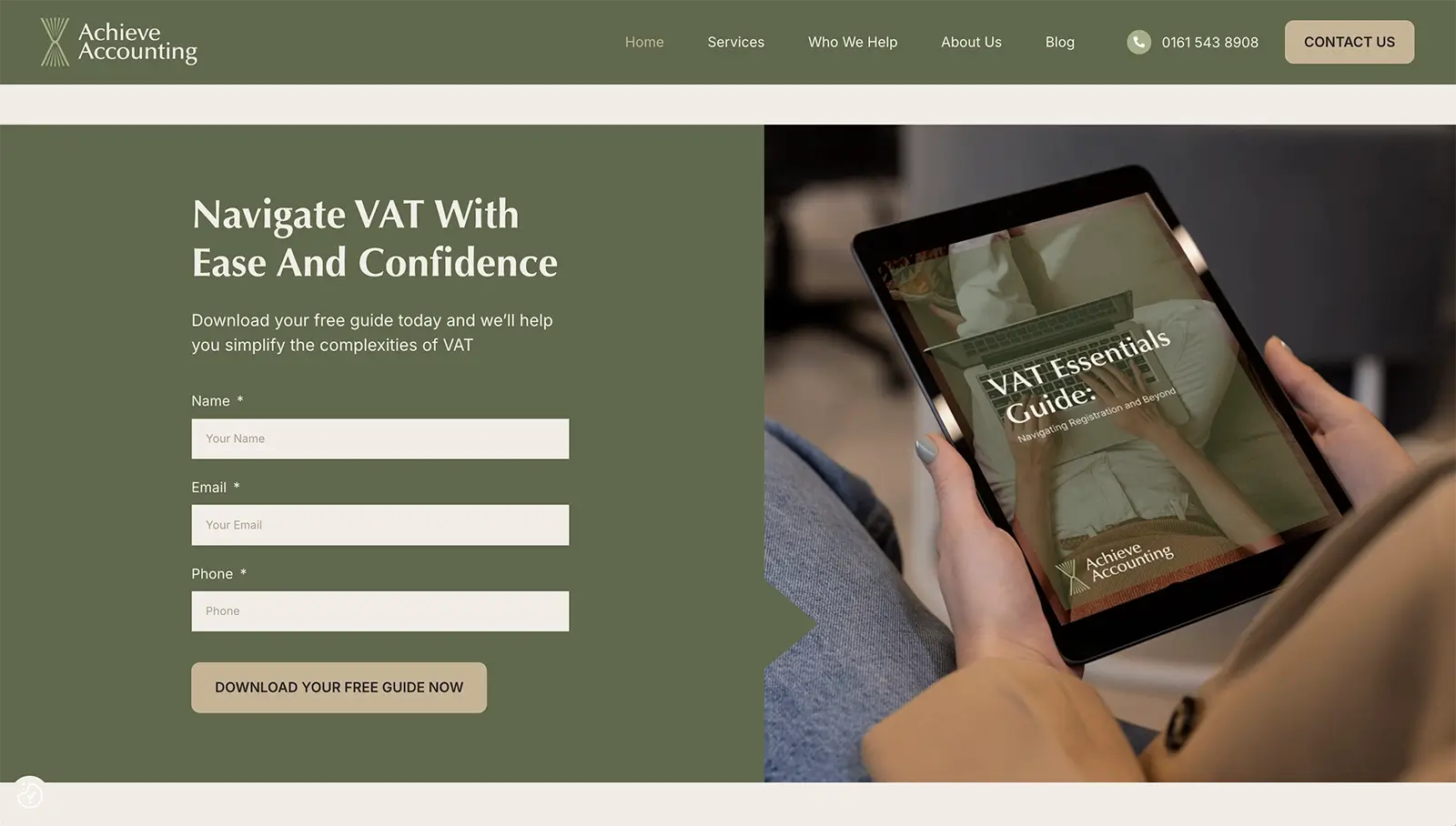
Most platforms like ActiveCampaign, Kajabi or Mailchimp output forms that… let’s be honest… don’t look great.
But this is where your emails, products and automations live, so your website needs to connect with them seamlessly.
The standard embed forms work, but visually they can feel clunky and out of place on a well-designed site.
We’ll take that code and run it through AI tools like ChatGPT or Gemini to clean it up, restyle it and make it feel like part of the brand.
2. Creating Bespoke Imagery
Some of our accounting clients have their own internal systems or platforms.
Instead of designing every visual from scratch, we use AI to help generate supporting imagery that represents those systems.
It speeds things up massively without compromising the end result.
3. Data and Visualisation
Accountants love data.
Spreadsheets, numbers, forecasts… it’s their world.
We’ve used AI to help generate animated graphs and charts that bring data to life on a website.
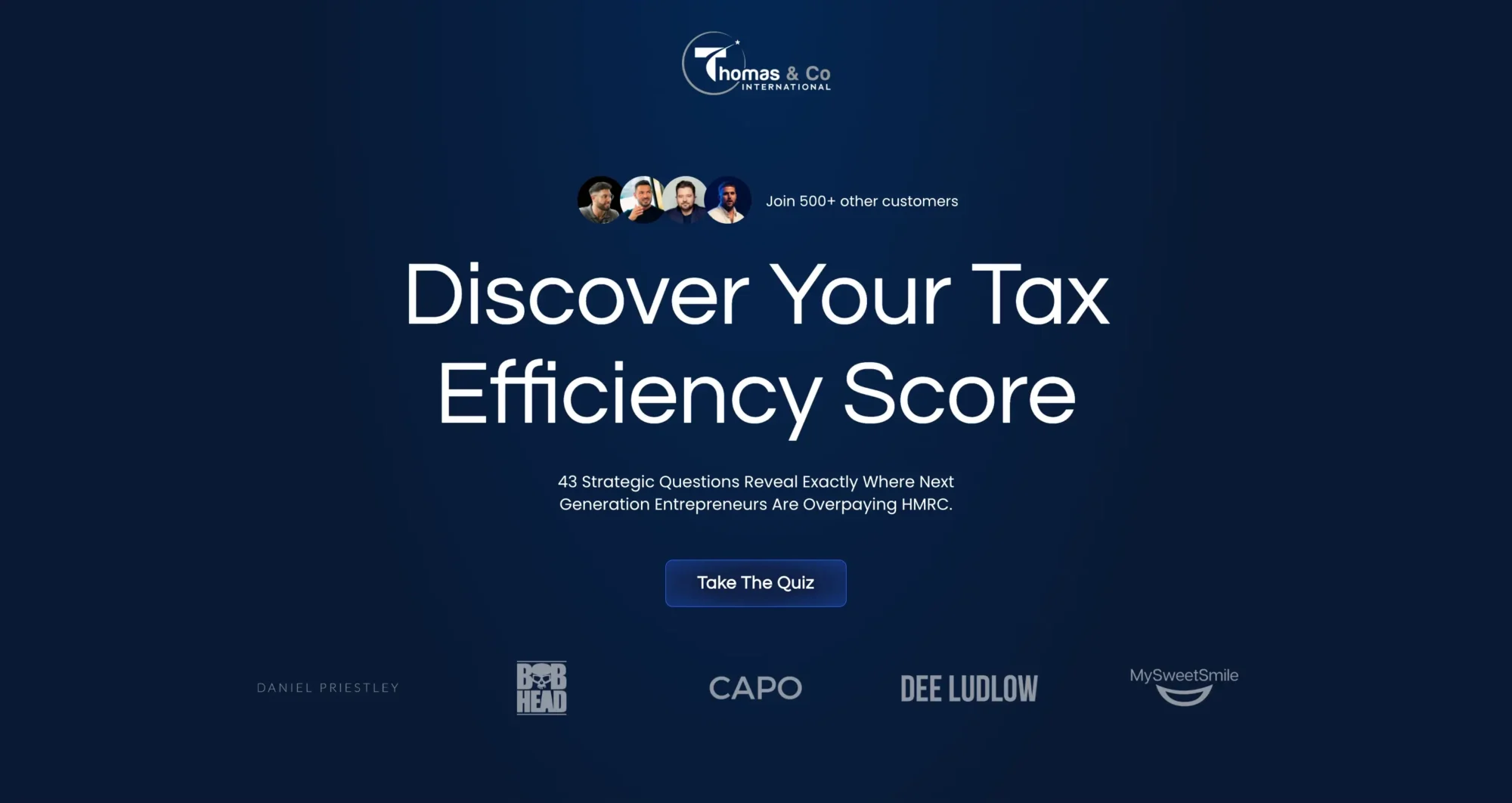
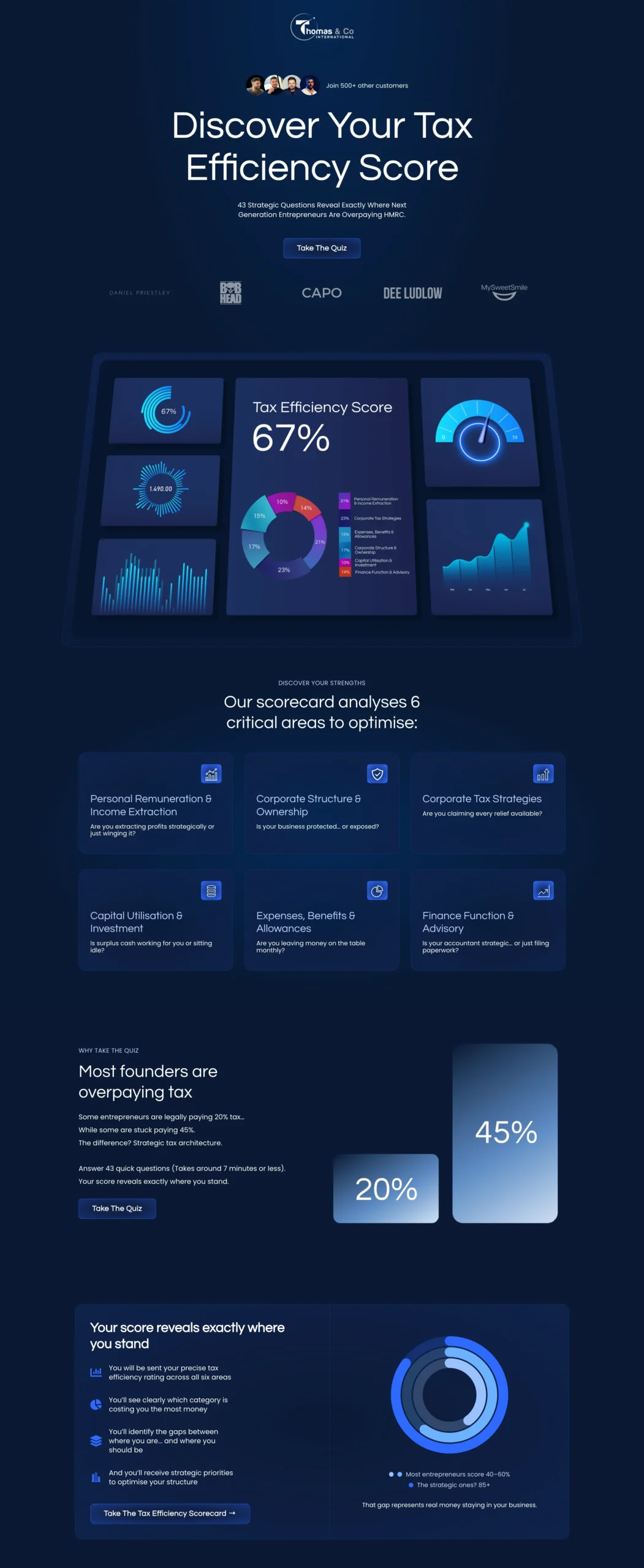
For example, on a landing page we built for Josh Thomas at Thomas & Co International, we created animated graphs that displayed key financial data on scroll.
Something that could have taken days to code manually was done in a couple of hours with the right prompts.
4. Wireframes and Early Structure
Sometimes you just need a quick visual to map out an idea.
AI is great for this.
Instead of jumping straight into design, we can use it to build out rough layouts and structures that show how a site could be organised.
It gives you something tangible to react to early on, rather than trying to explain everything verbally or through static wireframes.
For clients, this makes a big difference. They can see how pages might flow, how sections connect and how the overall experience could come together before we invest time into high-end design.
It also helps us move faster at the start of a project. We can test ideas, adjust structure and sense-check the layout quickly, then take the strongest direction forward and refine it properly.
Used in the right way, it removes guesswork without replacing the thinking behind it.

What Accounting Websites Actually Need
This is where context matters.
Accountants are not selling a product.
They are selling trust.
People are handing over their finances, their business decisions and in many cases their future.
So your website needs to reflect that.
It needs to feel:
Professional
Clear
Structured
Trustworthy
Most accountants have multiple services, which makes a website incredibly valuable for explaining what you do and how you help at different stages of business.
The challenge?
A lot of accountants are great with numbers… but struggle with the visual side.
That’s where strong branding and website design comes in.
Because how your website looks directly impacts how people perceive your expertise.
This is exactly where the answer to “Should I use AI to build my accounting website?” becomes much clearer in practice…
Case Study: Josh Thomas - Thomas & Co International
This is a great example of where strategy matters more than just “building a website”.
Before designing anything, we ran a full-day brand strategy workshop.
We mapped out the customer journey, how people would discover the business, what they needed to see and what would move them to take action.
From that, we built a lead generation system.
A tax scorecard funnel.
Within the first 24 hours, it generated over 300 leads.
His team of 12 chartered accountants and tax advisors were then able to follow up with each one, providing personalised insights and starting real conversations.
That doesn’t come from AI.
That comes from strategy.

So… Should I Use AI to Build My Accounting Website?
If you are just getting started and need something live quickly, AI can be a useful tool.
But if you are serious about building a brand, standing out and attracting better clients, it should not be the thing you rely on.
Use it to support the process.
Not replace it.
Like I mentioned earlier, one of the best ways to use AI right now is to help map out structure and get ideas down quickly.
But if you actually want to understand what is performing well in the market at this moment in time, that comes from real experience.
Working with a brand strategist, like ourselves at Digital Bear Studio who specialises in accounting websites gives you that.
It’s based on what we’re seeing day to day, what’s converting and what’s actually working in the real world.
AI, on the other hand, is pulling from a mix of sources. Some good, some not so good… and sometimes it just makes things up entirely.
So you can’t always rely on it to guide the bigger decisions.
That said, AI is not going anywhere. It will improve, and it will become more useful over time.
We’re keeping a close eye on it, testing what works and understanding where the limitations are right now.
But as it stands, from our point of view, it’s not quite there yet.
I’m a perfectionist, and AI-built websites are not at the standard (yet) that I would hand over to a client.
That doesn’t mean that won’t change. In six months, certain elements may improve and we may start using it more within our process.
But at Digital Bear Studio, the priority will always stay the same.
To deliver a high-end, well thought-out product that actually works.
Because your website is often the first impression someone gets of your business.
And in the accounting industry which is built on trust, that impression matters.
That’s the real answer to “Should I use AI to build my accounting website?” right now.
Not Sure Where Your Website Stands?
If you are not sure whether your current site is helping you or holding you back, we can help.
We offer a free website audit where we review your accounting website, your structure and your customer journey, and give you clear, actionable feedback you can implement straight away.
Because your website should be doing more than just existing.
It should be bringing the right people into your world.

Written by: